
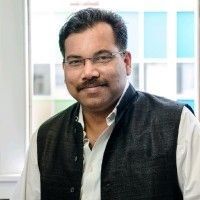
Tuesday June 9th, 2026 - Gaurav Sharma - From margins to mainstream: How Kiwi-Indians helped shape modern New Zealand
Gaurav Sharma is a Christchurch-based journalist and senior reporter with Radio New Zealand who has spent much of his career exploring issues of diversity, migration and identity in Aotearoa. He previously co-founded The Migrant Times and Multicultural Times, publications focused on strengthening ethnic representation in New Zealand media, and brings both historical insight and contemporary perspective to this story.
In this talk, he traces the long and often overlooked history of Indian New Zealanders and reflects on how that story continues to shape our national identity.
Many believe the story of Indians in New Zealand is a recent one, perhaps defined only by modern migration or the local dairy.
In truth, the tale of Indian New Zealanders is woven into the very fabric of our national history. From the first colonial ships in the 1700s and the trenches of Gallipoli, to the Waikato dairy farms and Pukekohe market gardens, the footprint is deep.
Early pioneers weren’t doctors or IT specialists; they were hardy men who undertook the gruelling labour of clearing scrub, digging drains, and flax milling, thus laying the literal foundations of our provinces.
While the 'Indian Dairy' later became a cultural cliché, it was actually a lifeline for families to survive and thrive in a land where other doors were often closed.
Today, the 'Kiwi-Indian' identity is far from a monolith.
Spanning from fourth-generation descendants to new arrivals, the community has grown from just six individuals in 1881 to six percent of our population today.
Now the third-largest ethnicity, Indian New Zealanders are among the nation's most prosperous, earning 20 percent more than the median income.
It is a story of resilience, adaptation and eventual triumph - an evolution from invisible pioneers to a cornerstone of New Zealand’s national identity.
Blog article on Gauravs talk - From margins to mainstream: How Indians help shape New Zealand
RNZ Asia journalist Gaurav Sharma delivered an enlightening presentation to U3A Cambridge members on Tuesday, 09 June 2026, challenging common misconceptions about the Indian community in New Zealand. His talk, titled "From margins to mainstream: How Indians help shape New Zealand," traced the remarkable 250-year history of Indian presence in the country, from 1769 to the present day.
Shattering myths about Indian New Zealanders
Sharma systematically addressed six prevalent myths about the Indian community, starting with the misconception that Indians are recent migrants. He revealed that the first Indians actually arrived in 1769 when two Indian sailors, Qasim and Naslim, came aboard a French ship from Pondicherry whilst Captain Cook was departing New Zealand.
The first recorded Indian to discover gold in New Zealand was Edward Peters from Goa, who made his discovery in Otago in 1857. This achievement was officially recognised by Governor-General Sir Anand Satyanand in 2009, with General Ridge now named in his honour.
Early settlement and dairy farming legacy
Between 1890 and 1918, Indians from Punjab began arriving in New Zealand, initially working to clear scrubland and create farmable land. Over 20-30 years, they saved money and purchased their own dairy farms. The first recorded Indian dairy farm was bought by Bhavram Singh in Kihikihi, followed by another farm known as the "Hindu farm" in 1919-1920.
Today, more than 100 Indian families continue dairy farming in the Cambridge area, contributing over 20% of New Zealand's milk supply. Sharma highlighted the story of Hardiya Singh Dev, who arrived in 1970 with just $2 and by 1988 had purchased his first dairy farm, now managing over 2,500 cows across three properties.
Historical discrimination and the White New Zealand Policy
Despite their small numbers - fewer than 100 Indians and Chinese combined out of a population of 13,000 in the Pukekohe area during the 1920s - newspapers published racist cartoons depicting "Hindu Peril" and an "Asiatic invasion." The Immigration Restriction Act of 1920 effectively banned all Asiatic people from entering New Zealand.
In 1925, war veterans formed the White New Zealand League, prompting Indians to establish their own organisations. The New Zealand Indian Central Association was formed in 1926 as an umbrella organisation, marking 2026 as its centenary year.
Discrimination was widespread: Indians were banned from cinemas' dress circles, refused service by barbers, and prohibited from using public facilities like the Tepid Baths in Auckland. These policies continued until 1987 when immigration restrictions were finally liberalised.
Wartime contributions often overlooked
Over 1,000 Indians died fighting alongside British forces at Gallipoli, yet their contributions went largely unrecognised until 2023, when the New Zealand government finally acknowledged 17 Indian Anzacs alongside 71 Chinese Anzacs in a special exhibition.
Modern challenges and achievements
Indians now constitute New Zealand's third-largest ethnic group with nearly 300,000 people, experiencing 22% growth. The median Indian income of $51,600 exceeds the national median of $41,700 by 20%. However, significant barriers remain.
Despite their economic success, Indians face a glass ceiling in corporate leadership. Air New Zealand CEO Nikhil Ravishankar remains the only Indian leading a major New Zealand company, and his appointment was met with racist social media comments that forced platforms to disable comments.
Many highly qualified professionals, including doctors, work as Uber drivers due to non-recognition of their overseas qualifications. The government has recently begun addressing this issue with new programmes for overseas-trained doctors.
Diversity within the Indian community
Sharma emphasised that Indians are not a monolithic community. India's constitution recognises 22 languages, with over 100 official dialects. Migration patterns vary by region: Punjabis and Gujaratis established the dairy and retail sectors, while recent IT professionals mainly come from southern India, particularly Bangalore. Additionally, many Indian New Zealanders are Indo-Fijians, descendants of indentured labourers taken to Fiji from 1879-1920.
Ongoing concerns
Despite Hindi being New Zealand's fourth most-spoken language, no Indian languages are offered as NCEA subjects. The community faces ongoing challenges with retail crime, particularly affecting dairy owners who operate behind security cages in areas like Papatoetoe.
Casual racism persists, with Sharma sharing a personal account of his wife being told by a stranger that Indians "come here to have babies." In 2023, hospital staff were officially prohibited from speaking their native languages at work, even during private conversations among themselves.
Call for recognition
Sharma concluded by noting that while the government has apologised to Chinese and Pacific communities for historical wrongs, no similar acknowledgement has been made to the Indian community despite documented discrimination including exclusion from public facilities, employment barriers, and residential restrictions.
The presentation highlighted how Indians have moved "from margins to mainstream" through adaptation and resilience, building businesses when employment doors were closed, and contributing significantly to New Zealand's agricultural and economic development over more than two centuries.