
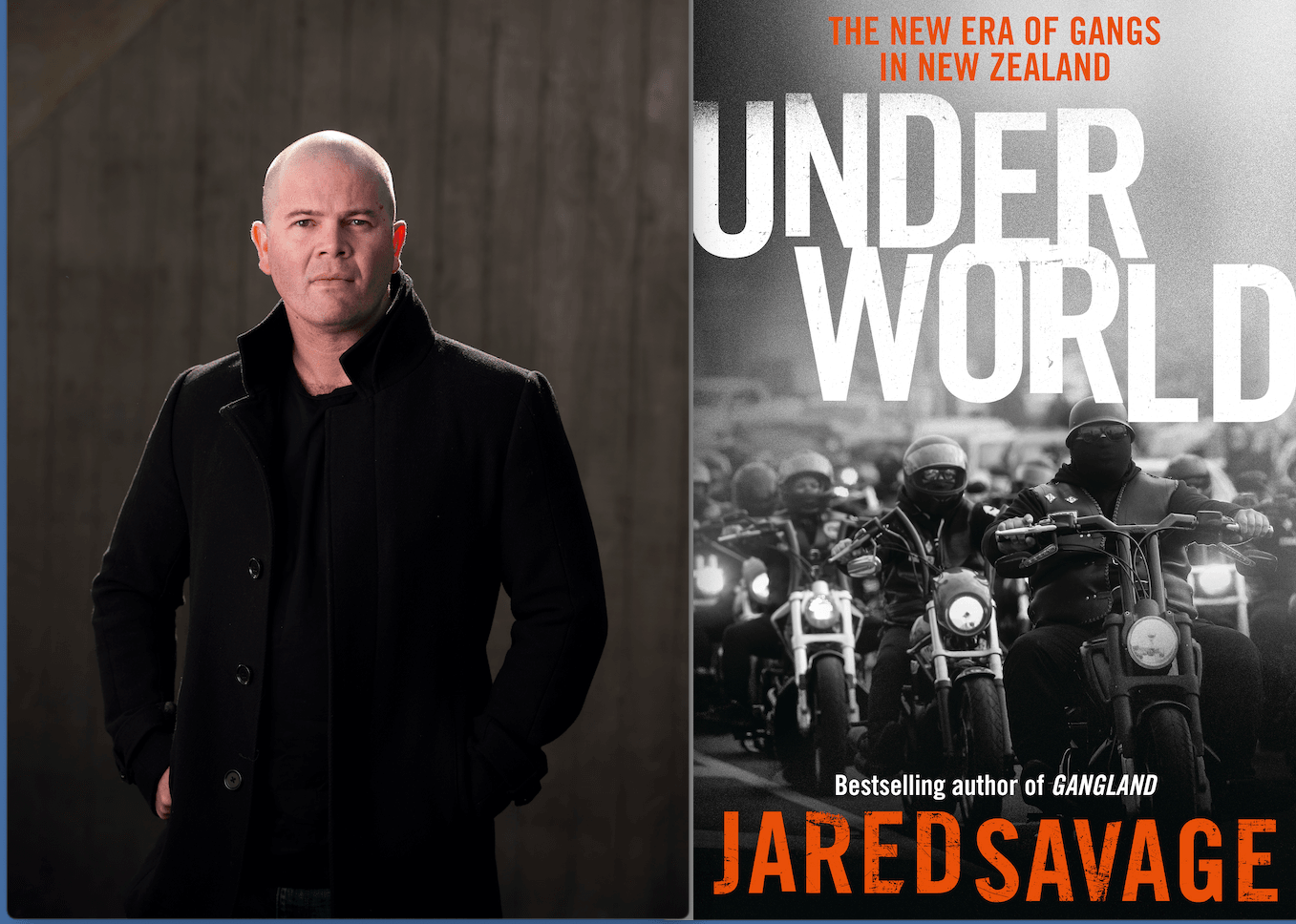
Tuesday July 14th, 2026 - Jared Savage - Underworld: The evolution of organised crime in NZ.
Jared Savage is an award-winning investigative journalist with the New Zealand Herald, where he has reported on crime and justice for more than two decades. Twice named best reporter in the country, he is the author of the bestselling books Gangland, Gangster’s Paradise, and most recently Underworld: The New Era of Gangs in New Zealand (2025).
Drawing on years of frontline reporting, Savage traces how organised crime in New Zealand has evolved from the motorcycle gangs of the 1970s and 80s into a sophisticated, globalised criminal industry. What began as locally rooted groups shaped by social and economic marginalisation has shifted into a highly profitable, transnational enterprise fuelled by methamphetamine, international deportee networks, and direct links to overseas syndicates.
In this talk, he explores the rise of the so-called “new era” gangs, the scale of modern drug imports, the increased firepower and technological sophistication of criminal groups, and the wider social consequences for New Zealand communities. It is a story of how crime adapted faster than many expected, and how the country now finds itself confronting a far more connected and commercially driven underworld.
Blog article
Inside New Zealand's methamphetamine crisis: journalist Jared Savage addresses U3A Cambridge
From court reporter to author
Savage explained how he began his journalism career after failing calculus at school and switching into journalism classes. He started at the New Zealand Herald around 2006, initially covering minor District Court cases before a tip-off led him to a major methamphetamine trial involving a supplier laundering millions of dollars through Auckland's Sky City casino. This case drew him into two decades of reporting on organised crime, eventually leading to his books, including Underworld.
How meth changed organised crime in New Zealand
Savage described methamphetamine as a highly addictive drug that produces an intense but short-lived high, followed by severe physical and psychological harm, including paranoia, weight loss, and addiction. He shared a direct account from a woman he interviewed in 2019, who described using meth throughout pregnancy and losing her teeth and health to addiction, though she is now in recovery.
He explained that organised crime in New Zealand was historically small and local, but the arrival of methamphetamine transformed it into a highly profitable, sophisticated industry. Supply shifted from local manufacturing using pseudoephedrine (once sourced from cold and flu medicine, later imported from China) to large-scale importation once precursor chemicals were banned.
The impact of Australian deportees and international cartels
From around 2015, Mexican cartels and Asian crime syndicates began targeting New Zealand due to high profits, with a kilogram of meth worth $1,000 in Mexico but up to $350,000 in New Zealand a decade ago. At the same time, Australia's "501" deportation policy returned New Zealand-born individuals, including senior gang members, who established local chapters of Australian gangs such as the Comancheros and Mongols. Savage said this disrupted the established order among New Zealand gangs and led to increased violence, including drive-by shootings and an incident where 96 bullets were fired into a family home in Tauranga.
Growing scale of seizures and corruption risks
Savage outlined how drug seizures have grown dramatically, from 3 kilograms nationally in 2003 to shipments exceeding 500–700 kilograms in recent years. Despite this, wastewater testing shows methamphetamine consumption has also risen sharply, from around 13–15 kilograms per week nationally to over 30–40 kilograms per week by 2024, with smaller, economically deprived towns disproportionately affected. He also raised concerns about corruption risks, citing cases involving port workers, prison guards, baggage handlers, and even a police officer compromised through a relationship with a gang member.
Government response
Savage noted that a Ministerial Advisory Group led by MP Casey Costello had proposed recommendations in 2025, including appointing a dedicated Minister for Organised Crime, but said no significant action had followed in 2026, partly due to other government priorities and the approaching election.
Questions and discussion
In response to audience questions, Savage discussed rising cocaine use, methods used by gangs to conceal wealth through legitimate businesses, and advised that open family discussion and education are important in helping protect children and grandchildren from involvement in drug use.