
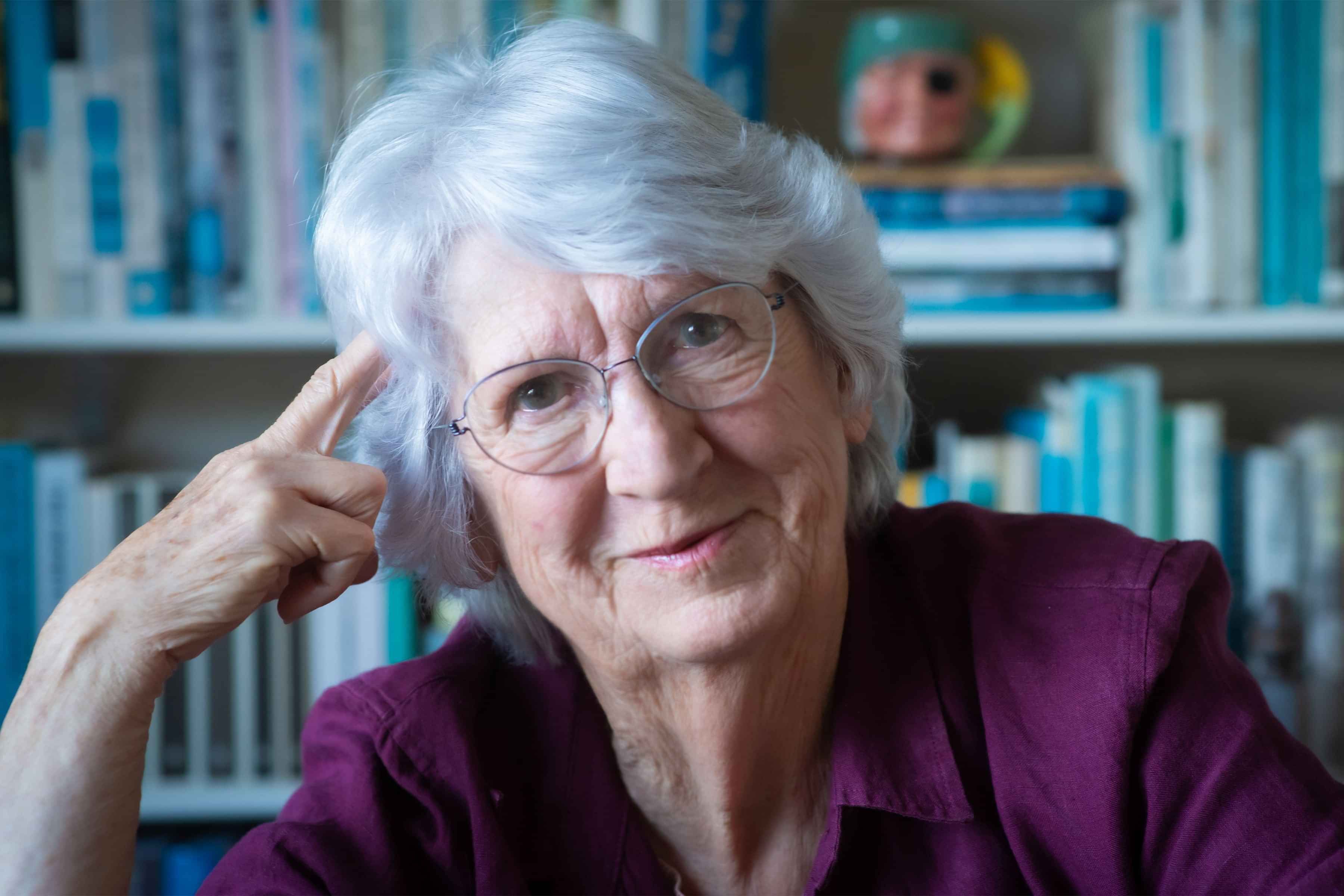
Tuesday November 10th, 2026 - Dame Fiona Kidman - Telling Stories
About me: Fiona Kidman is a novelist, short story writer, poet and memoirist. Her original occupation was as a librarian. In the early 1960s she began to write journalism , radio drama and, later, television drama, Her first novel ‘A Breed of Women’, published in 1979 caused controversy but she continued to write in the face of some opposition. Her 2018 novel This Mortal Boy won the Jann Medlicott Ockham New Zealand Book Award for Fiction. Her work is translated into several languages. She has been awarded a damehood for services to literature and is a Chevalier des Artes et Lettres by the French government, and has also been awarded the French Legion of Honour. Currently, she is a Patron of the Randell Cottage Writers Trust, also The Long Hall, The New Zealand Poetry Society, and of the Refugee and Migrants Trust.
My most recent book is The Midnight Plane: Selected and New Poems (pub. Otago University Press 2025)
Blog article
Telling Stories: Dame Fiona Kidman on Memoir, Memory and Writing a Life
At the U3A Cambridge meeting at Raleigh Street Christian Centre on 10/11/2026, guest speaker Dame Fiona Kidman spoke about telling stories. A novelist, short story writer, poet and memoirist, she has facilitated memoir writing courses in Wellington for about 15 years.
A memoir in the making
Fiona's new book, The Road to Wherever, is due from Penguin Random House in April. It combines and updates two memoirs she published about 20 years ago, At the End of Darwin Road and Beside the Dark Pool. Cutting 200,000 words to 100,000 was, she said, one of the hardest jobs she has done.
She read from her time as Katherine Mansfield Fellow in Menton, France, in 2006 with her late husband, Ian Kidman. The extract described a return to Kerikeri, where the gum trees of her childhood had been cut down. She found that her friend Madeleine remembered the past differently, and that the Darwin Road she searched for now existed only in her imagination.
Growing up an outsider
Fiona described a childhood on her grandparents' Waikato farm, where her grandfather, who had dementia, told her stories. After the war her father moved the family to Kerikeri, then Waipū and Rotorua. She said she felt like an outsider, and that storytelling helped her find her place. Her work as a journalist, radio dramatist and screenwriter taught her to ask questions, write dialogue and picture scenes.
Advice for memoir writers
Memoir is a selective collection of memories. You choose what to include, unlike autobiography, which is expected to tell the whole story.
Write painful memories down first. They are a first draft and can be cut later.
Memory can be faulty, so ask family and friends about the same event.
Look at birth, death and marriage certificates, jewellery, letters and photographs.
Use the senses of sight, sound, taste, touch and smell.
Ask questions of older relatives while you still can.
Try poetry as a way of telling stories.
She closed by reading three poems: "Electricity", a Christmas poem and "The Midnight Plane".
Questions from the audience
Fiona said she mostly writes for herself, and described driving through Scotland in the snow while researching her novel about Norman McLeod. She writes from about 9 or 10am until 1pm, aiming for roughly 1,000 words a day, and usually does at least five drafts. She said her craft has improved, and her storylines are now cleaner and simpler. She believes publishers such as Allen & Unwin and Bateman still look for stories with international appeal, and said her work is widely translated, especially in France.