
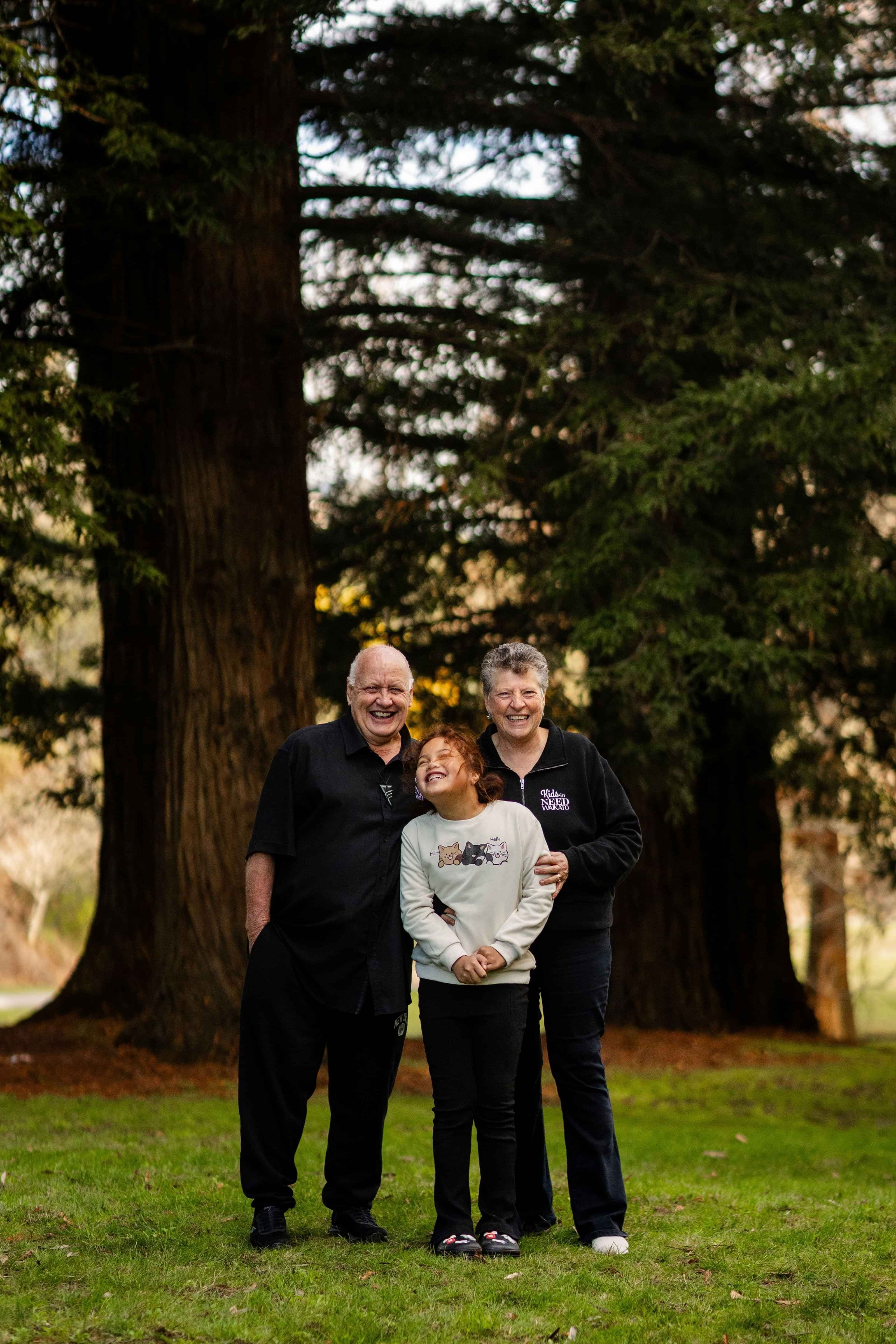
Tuesday September 8th, 2026 - Linda Roil - Kids in Need Waikato- It Takes a Community: Supporting children in care and their caregivers
Linda founded Kids in Need Waikato in 2018 to support children in foster care and kinship care, and the caregivers who raise them.
As caregivers themselves, Linda and her husband Graeme know firsthand the joys and challenges of the role, having raised Blossom, an amazing 7 year old, since she was 2 hours old. Before Blossom, they cared for dozens of babies and children. A registered charity, Kids in Need Waikato provides essential care packs so children feel seen and valued, alongside connection and encouragement for the caregivers who show up for them every day.
None of this happens alone - it's made possible by a community that shows up too, through volunteering, donations, and simply caring about tamariki who need it most.
Kids in Need Waikato: Supporting Children in Care
At the September meeting of U3A Cambridge, guest speaker Linda Roil shared the story of Kids in Need Waikato, a community charity she and her husband Graeme founded around eight and a half years ago. What began as a foster-care family has grown into an organisation supporting almost 1,500 children on an ongoing basis, along with around 650 caregivers across the Waikato region.
From fostering to supporting family caregivers
Linda explained that the charity originally supported foster children, but a change in legislation known as 7AA shifted the system so that uplifted children are now placed with family members rather than foster carers wherever possible. This meant grandparents, aunts and uncles are increasingly being asked, often with little notice, to take in children. Many receive little practical or financial support, and social workers can take months to provide the paperwork needed for caregivers to access the unsupported child benefit. Linda noted that as a result, far fewer people (who are unrelated to the children) are available to foster (as the foster system more or less shut down.) Now that Karen Chhour, the Minister for Children, has repealed section 7AA, there is difficulty finding carers. Linda said that she is not keen on being a foster parent because of the lack of support by the system for them.
Personalised care packs for kids in need/care
The charity's core work involves creating individually tailored care packs for each child, taking into account allergies, interests, sizing and safety considerations such as avoiding particular colours linked to gang associations. Packs include new underwear, socks and pyjamas, along with clothing, shoes, books, toys and toiletries, at an estimated cost of around $250 per pack. This year the charity made 1,056 packs, with a further 20 new children being referred each month. The organisation works alongside more than 30 partner agencies, including Oranga Tamariki.
Supporting caregivers
Linda spoke about the toll caregiving takes, describing grandparents in their 80s raising toddlers, and caregivers managing children with trauma, foetal alcohol spectrum disorder, autism or ADHD, often without adequate school support such as teacher aides. She highlighted the lack of respite care and described a retreat set up on the charity's property to give caregivers a break. Coffee groups have also been established across the region to help caregivers connect and access support.
Funding and community support
The charity does not seek government funding, relying instead on grants, donations and community support, roughly split 50/50. Fundraising events include the Colour Cambridge run, which raised between $30,000 and $35,000 last year, held this year on 18 October. Programme manager Nicola Byrd spoke about the Christmas wish tree appeal and how teenagers now receive vouchers so they can choose their own clothing, an approach that grew out of feedback from a 13-year-old who valued being able to choose her own Christmas gift for the first time.
Housekeeping notes and change of venue for October and November meetings
Carey Church opened the meeting as chair and co-founder of U3A Cambridge, covering routine housekeeping items including venue directions, fire exits and phone reminders.
Carey advised members that the October and November lecture meetings will be held at the Raleigh Street Christian Centre rather than the usual Te Awa Woolshed venue, due to its larger auditorium and reliable audio-visual facilities. Members were reminded that ample parking is available nearby, but asked not to park in the strip reserved for the neighbouring accountants and medical centre. The October history meeting and the December meeting will remain at the usual venue.