
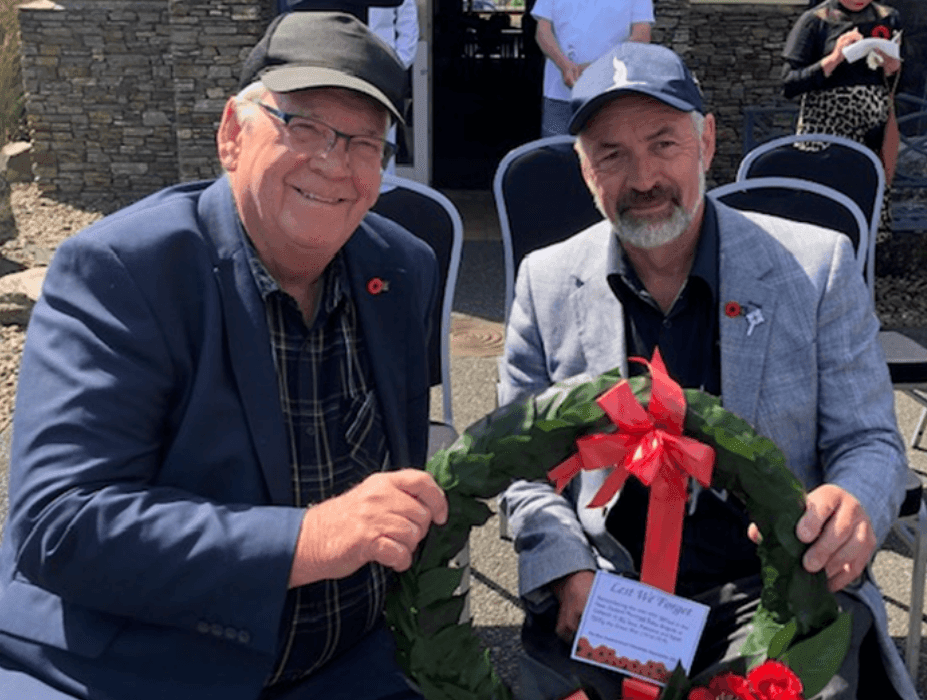
Tuesday May 26th, 2026 - JOINT PARTNERSHIP HISTORY LECTURE - Christopher Archer & Warren Dawson ( - Recovering a New Zealand ANZAC Legacy – The Story of the New Zealand Mounted Rifles Brigade in Egypt and Palestine (1916–1919)
On the eve of WWI in 1914, New Zealand dispatched two brigades to join the Imperial Army—one of Infantry and one of Mounted Horse. After Gallipoli, the infantry was sent to Europe, but the Mounted Brigade remained in Egypt.
Over the next three years, the troopers of the NZMR rode 400 miles across desert and mountain in a campaign that defeated the Ottoman, German, and Austrian forces in a series of victories unmatched in military history. Yet, their extraordinary story was largely forgotten in the aftermath of the war—until, a hundred years later, their legacy began to be recovered.
Christopher Archer, historian and author of Saviours of Zion, and Warren Dawson, who retraced his grandfather’s route in partnership with Israeli historians, will share their insights into this remarkable history. Together, they have also been closely involved with the project to erect a 5-metre Silver Fern memorial in Gan Sorek, Israel, commemorating the New Zealand troopers who fought in Palestine.
Blog Article about the talk
New Zealand's Forgotten Heroes: The Mount Rifle Brigade in World War I
On a crisp autumn morning at the U3A Cambridge meeting, local historian Christopher Archer and Warren Dawson shared a remarkable story that many New Zealanders have never heard - the heroic role of New Zealand's Mounted Rifle Brigade in the Middle Eastern campaign of World War I.
Beyond Gallipoli: A Different Kind of War
While most Kiwis know about Gallipoli and the Western Front, Chris Archer explained that New Zealand also fought an entirely different campaign in the Middle East. "The war in the Middle East was an entirely different campaign," he noted, describing how this story had been largely overlooked in New Zealand's historical narrative.
Archer’s interest was sparked years ago when a friend told him about the Australian Light Horse victories, with no mention of New Zealand's involvement. This prompted him to research what became a fascinating journey of discovery about New Zealand's mounted rifles operating in Palestine during 1917-1918.
The Scale of New Zealand's Commitment
The statistics Archer shared were staggering. Out of New Zealand's population of about one million, 100,000 men went to war - representing 10% of the male population. Of these, 18,000 died and 40,000 were wounded, one of the highest casualty rates of any country in World War I.
The mounted rifle brigade was particularly significant, with around 10,000 horses sent to war alongside the men. These weren't traditional cavalry charging with swords, but mounted infantry who rode to battle positions then dismounted to fight with rifles.
A Personal Connection Across Generations
Warren Dawson’s remarkable story began with a farm name - Sarona - that his grandfather had brought back from the war. In 2018, whilst developing his property "Siaona Park" near Tauranga, two Israeli visitors arrived at his gate, drawn by the name that matched a place near Tel Aviv.
This chance encounter led to an extraordinary discovery. Warren's grandfather had kept detailed records of his service, including 174 letters and a comprehensive field diary. Among these treasures was a German machine gun sight captured during the Battle of Ayun Kara on 14 November 1917 - the battle where 53 New Zealand soldiers died.
The Battle of Ayun Kara
Dawson described this battle as "what many historians both New Zealand and Australia consider was their greatest victory in the whole campaign." The battle took place in the hills near what is now the Israeli city of Rishon LeZion, where New Zealand forces faced fierce opposition from entrenched Ottoman and German forces.
This was particularly significant as the first battle in New Zealand military history fought under complete New Zealand command, rather than British leadership. "If there's ever a day that wants to identify New Zealand coming of age, I like to put that down as that day," Dawson reflected.
A Memorial Restored
Discovering that there was no memorial at the Ayun Kara battlefield, Dawson and Archer embarked on a fundraising campaign to create a lasting tribute. Despite COVID-19 challenges, they successfully commissioned a 4.5-metre silver fern memorial, built in Israel and unveiled on 30 November 2023.
The silver fern was chosen because it appears on every headstone of fallen New Zealand soldiers in Commonwealth war cemeteries around the world. As Dawson noted during the dedication, "We say we will remember them. I thought, we've really forgotten these guys."
Technology and Tactics
Archer highlighted how World War 1 saw dramatic technological advances that changed warfare forever. Aeroplanes, initially used only for observation, evolved into weapons platforms. Machine guns revolutionised combat, and the transition from horses to armoured cars began during this campaign.
The mounted rifles operated in sections of four men, with one designated to hold the horses while three fought. Losing your horse in the desert could mean losing your life, making these animals more than companions - they were essential for survival.
Recognition and Remembrance
During their visits to Israel, both men were struck by the warmth of the reception and the deep appreciation expressed by locals. As one elderly Israeli told Dawson, "The Kiwis, they came the furthest, they gave the most. They were the youngest nation to the oldest nation. We will never forget you."
The presentation concluded with a reminder that while 53 New Zealand soldiers died in this single Middle Eastern battle, the Western Front saw even greater losses - with over 800 New Zealanders killed in one day at Passchendael
Archer and Dawson’s work ensures that the story of New Zealand's Mounted Rifle Brigade will not be forgotten, providing a fuller picture of this country's remarkable contribution to World War I beyond the well-known stories of Gallipoli and the Western Front.