
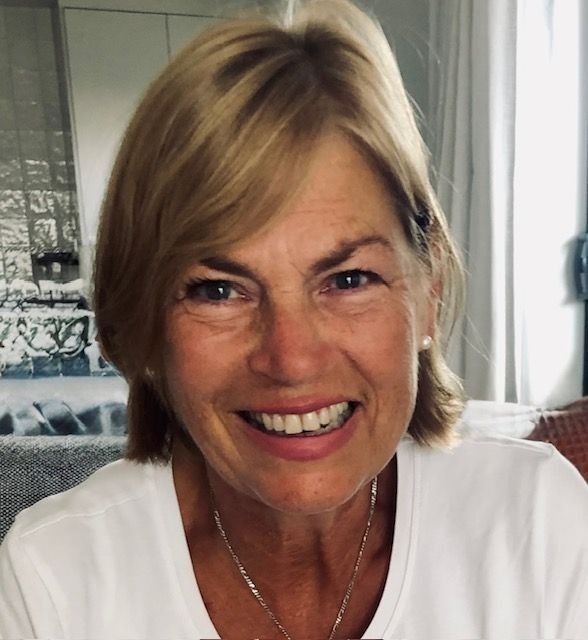
TUESDAY April 14th, 2026 - Charlotte Stevens - The Real Life of a PI (Private Investigator)
Charlotte joined the Metropolitan Police in London at the age of 19 and, after a short while, became a Detective Constable. She spent 20 years in the Police and her last 10 years specialised in serious crime squads, including the Flying Squad and the Regional Crime Squad, investigating crimes such as armed robberies, kidnappings, and drug importation.
A holiday in New Zealand in April 1999 led to Charlotte moving to NZ, initially for a year, but she loved it so much she never returned to work in the UK. Instead, within 3 weeks of arriving, she had a job as an investigator with the Serious Fraud Office.
This background in Law Enforcement led Charlotte to become a Licensed Private Investigator.
Blog Article - From London's Flying Squad to Cambridge: A Detective's Journey
U3A Cambridge members who missed Charlotte Stevens' fascinating presentation on 14th April can now catch up on her remarkable career journey from Metropolitan Police detective to licensed private investigator in New Zealand.
From Pub Worker to Police Officer
Charlotte's path into policing began unexpectedly in 1980 when she was working in a pub near Lord's Cricket Ground in London. Local police officers suggested she join the force while she was retaking exams for university. Despite her father's initial disapproval, Charlotte started training at Hendon Training School in December 1980 at just 19 years old.
After completing 16 weeks of training, she began her career in uniform at Harrow and Whetstone in northwest London. Her early experiences included policing major events like Live Aid at Wembley Stadium in 1985, where she worked to prevent pickpocketing and maintain order.
Rising Through the Detective Ranks
Charlotte's ambition led her to apply for detective training after just 18 months on the Crime Squad. She successfully passed the rigorous interview process on her first attempt - unusual for the time - and completed 10 weeks of detective training in 1984.
Posted to Kilburn as the only female detective among 10-12 male colleagues, Charlotte frequently handled sexual offences and child abuse cases. She shared a powerful example of supporting (living with) a rape victim named Ruth for five days while colleagues conducted surveillance at a local McDonald's to catch the perpetrator, who was ultimately sentenced to 20 years.
Challenging Workplace Dynamics
As one of very few female detectives, Charlotte faced workplace challenges head-on. She recounted confronting a detective inspector about inappropriate behaviour toward female administrative staff, demonstrating the direct approach she took to address sexism in the force.
The Elite Flying Squad
Charlotte's career pinnacle came with invitation to join the prestigious Flying Squad in 1990 - Scotland Yard's elite unit for combating armed robbery. As the only woman among 40 male detectives, she trained as a firearms officer and surveillance specialist.
The Flying Squad, nicknamed "The Sweeney" from Cockney rhyming slang (Sweeney Todd = Flying Squad), dealt exclusively with armed robberies of banks, building societies, jewellery shops, and cash-in-transit vehicles. Charlotte participated in Operation Crozon, a three-year investigation that resulted in arrests of robbers responsible for 104 armed robberies totalling over £500,000.
Her role often involved going undercover into banks about to be robbed, using the code words "attack, attack, attack" to signal when robbers arrived. She carried a .38 Smith & Wesson revolver and used sophisticated surveillance equipment.
Transition to New Zealand
After nearly 20 years with the Metropolitan Police, a chance meeting with a New Zealand friend led to a holiday visit in April 1999. Charlotte's impulsive nature led her to take unpaid leave and emigrate permanently, arriving on 3rd August 1999.
Within 20 days, she secured a position as investigator with the Serious Fraud Office in Auckland. Working in teams with forensic accountants and prosecutors, she completed 19 investigations with a 100% success rate of guilty verdicts or guilty pleas.
Private Investigation Career
After meeting her future husband Richard through a cold telephone call in 2003, Charlotte established D'Urville Solutions - named after the boat Richard owned, which was named after French explorer Philippe Dumont d'Urville.
Charlotte explained that becoming a licensed private investigator in New Zealand requires meeting strict character requirements, police screening, and licence renewal every three years. She sits on the ethics committee of the New Zealand Institute of Private Investigators.
Her current work includes insurance investigations, whistleblower services for large companies, and workplace bullying investigations. She highlighted how AI technology now assists with transcribing and summarising interviews, though she emphasised the need for careful verification of AI-generated content.
Key Principles
Throughout her presentation, Charlotte emphasised that greed and money remain at the root of most criminal investigations, whether dealing with armed robbers in London or fraud cases in New Zealand. She noted the collaborative nature of New Zealand's smaller community compared to London's anonymity.
Now working primarily from home, Charlotte continues her investigative career while maintaining the excitement and purpose that drove her through two decades of police work in one of the world's most challenging environments.